
Running an accountancy practice means far more than completing client work. Tracking deadlines, coordinating teams, managing documents, and maintaining communication across a growing client base all create administrative pressure that grows faster than headcount. Practice management software gives UK accounting and bookkeeping firms a single platform to organise client work, automate routine tasks, and keep the practice running efficiently as it scales.
Practice management software for accountants tracks who is doing what, by when, and for which client. This differs from accounting software like Xero or QuickBooks, which handles client transactions and financial reporting. Both work hand in hand, and most practices use both.
Key Features of Accounting Practice Management Software
The most effective platforms cover the full client lifecycle, from onboarding through to billing.
- Client Management and CRM: A central database stores contact details, engagement history, and service agreements, giving everyone in the firm access to current information without searching across separate systems.
- Workflow and Task Automation: Automated workflows create recurring tasks for VAT returns, payroll, and accounts preparation, reducing manual setup and ensuring nothing is overlooked. For firms that also rely on bookkeeping support for accounting practices, workflow automation helps coordinate work between in-house and outsourced teams without confusion
- Deadline and Compliance Tracking: Platforms track HMRC filing deadlines, Companies House submissions, and internal review milestones, alerting the relevant team member when action is required.
- Document Management and Client Portals: Secure document storage, version control, and client portals allow practices to share files, request information, and collect digital signatures without relying on email.
- Workload Management: Dashboards give managers real-time visibility of each team member’s tasks and capacity, helping identify bottlenecks before they affect delivery.
- Time Tracking and Billing: Integrated time tracking records billable hours against specific jobs and feeds directly into invoicing, with reporting that shows profitability by client and service line, particularly useful for firms offering management accounts services alongside compliance work.
Best Practice Management Software for Accountants in the UK
Here are some of the best practice management software for accountants in the UK:
1. IRIS Practice Management:
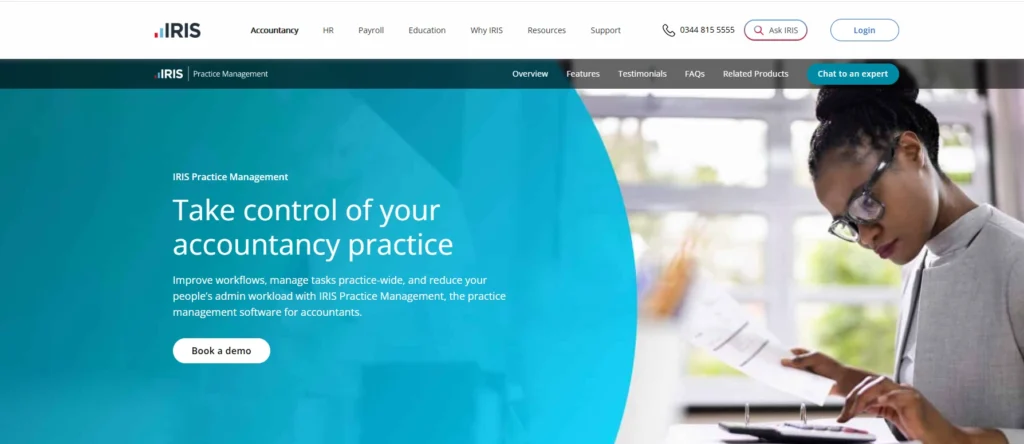
A long-established choice for UK practices, particularly larger firms. Offers comprehensive workflow, compliance tracking, and billing tools with deep integration across the wider IRIS suite.
2. Karbon:
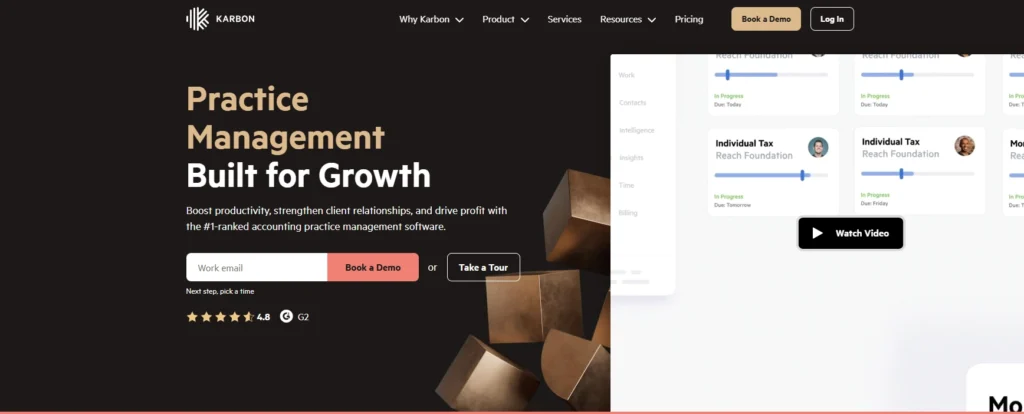
Built around a shared inbox that turns client emails into trackable tasks. Strong collaboration tools, workflow templates, and real-time visibility make it a leading choice for growing UK practices.
3. Bright Manager:
Popular with smaller and mid-sized firms for its straightforward setup and accessible pricing. Covers CRM, workflow, deadline tracking, and client communication in one clean interface.
4. Pixie:
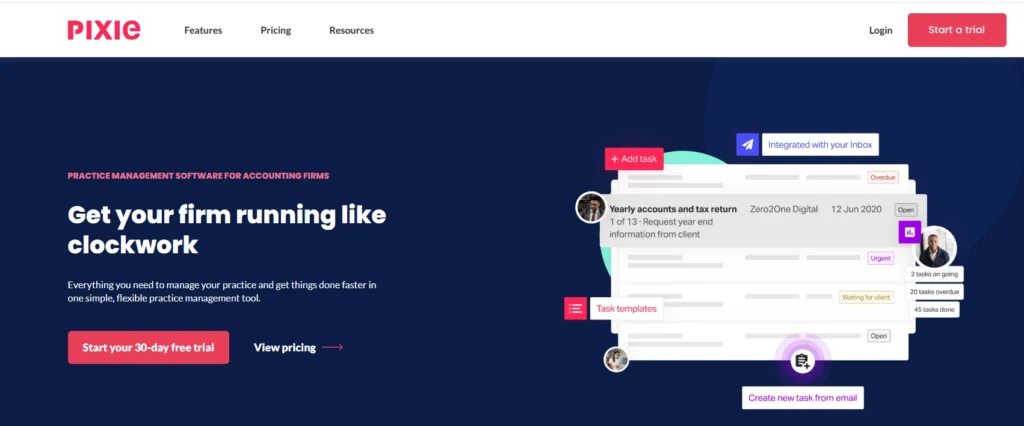
Designed for smaller practices and sole practitioners. Lightweight, easy to adopt, and focused on the core features most small firms actually use, without unnecessary complexity.
5. TaxCalc:
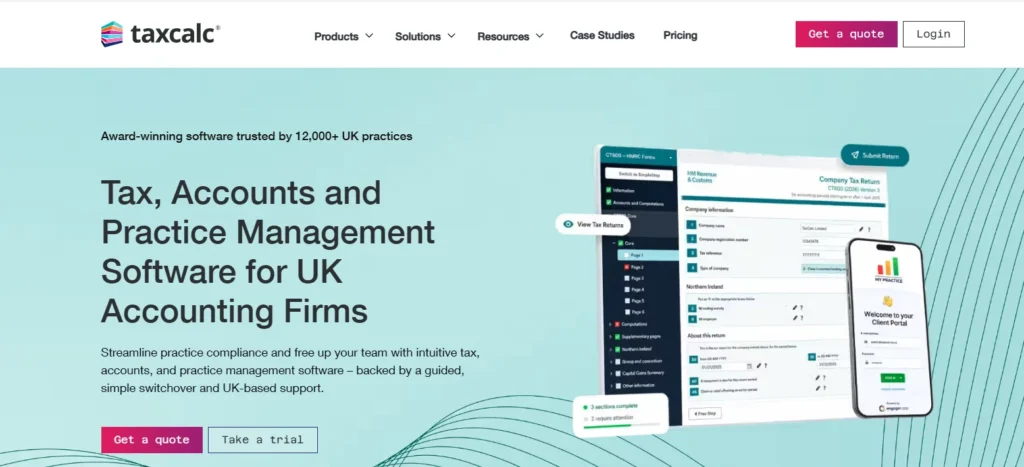
Combines tax return preparation with practice management functionality, making it a practical all-in-one option for firms that want to handle both within a single environment.
6. Bright:
Formerly Digita and CCH, Bright brings together tax, accounts, and practice management tools in an integrated platform built specifically for UK compliance requirements.
7. TaxDome:
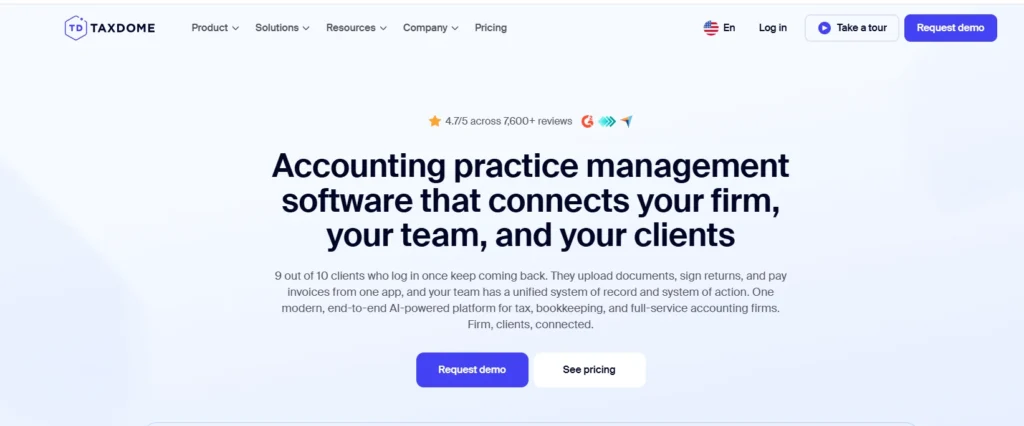
An all-in-one platform with unlimited client and document storage, a branded client portal, and workflow automation. Gaining strong traction among UK practices for its scalability and predictable pricing.
8. Xero Practice Manager:

Ideal for practices already operating within the Xero ecosystem. Provides job tracking, time and billing, staff management, and reporting tightly integrated with Xero HQ.
Practices should compare current UK pricing, integration options, and support directly with each provider before committing, as plans and features change regularly.
How to Choose the Right Platform for Your Firm
The right software depends on firm size, client volume, existing tools, and growth plans. Smaller practices benefit from straightforward systems with clear pricing and minimal setup. Larger firms with multiple service lines need more advanced workflow automation, capacity planning, and reporting. Requesting trials and mapping each platform against your most common client engagements is the most practical way to identify the right fit before committing.
Data Security and UK Compliance
Practice management platforms hold significant volumes of sensitive client data and must meet UK GDPR requirements. Reputable platforms provide role-based access controls, audit trails, encrypted storage, and secure document sharing, confirm that any platform you adopt meets current data protection standards and Making Tax Digital requirements where relevant.
Can Outsourced Accounting Support Improve Practice Efficiency?
Practice management software improves how a firm organises and monitors its work, but it does not address underlying capacity constraints. Practices facing volume pressure during peak periods often combine their platform with outsourced accounting services UK providers to handle transaction processing, reconciliations, and year-end preparation reliably outside the firm.
StellarWiz provides outsourced bookkeeping and accounting support to UK accountancy practices on a scope and scale that fits your requirements. Find out how StellarWiz can support your firm’s capacity alongside the practice management tools you already use.
Also Read: Top 10 outsourced accounting companies in the uk
Frequently Asked Questions
What is practice management software for accountants?
A platform that manages the internal operations of an accountancy firm including client records, workflow automation, deadline tracking, document management, and billing.
What is the best practice management software for accountants in the UK?
No single option suits every firm. IRIS, Karbon, Accountancy Manager, Pixie, TaxCalc, Bright, TaxDome, and Xero Practice Manager are among the most widely used by UK practices.
What is the difference between practice management software and accounting software?
Accounting software processes client transactions and produces financial reports. Practice management software manages how the firm operates tasks, deadlines, documents, workloads, and billing.
How much does practice management software cost in the UK?
Pricing varies by platform and firm size. Some charge per user per month; others offer flat-rate plans. Request current pricing directly from each provider.
Can practice management software help accountants save time?
Yes. Automating recurring tasks, deadline reminders, and document requests removes significant manual admin. Integrated time tracking and centralised client records reduce time spent on invoicing and chasing information.