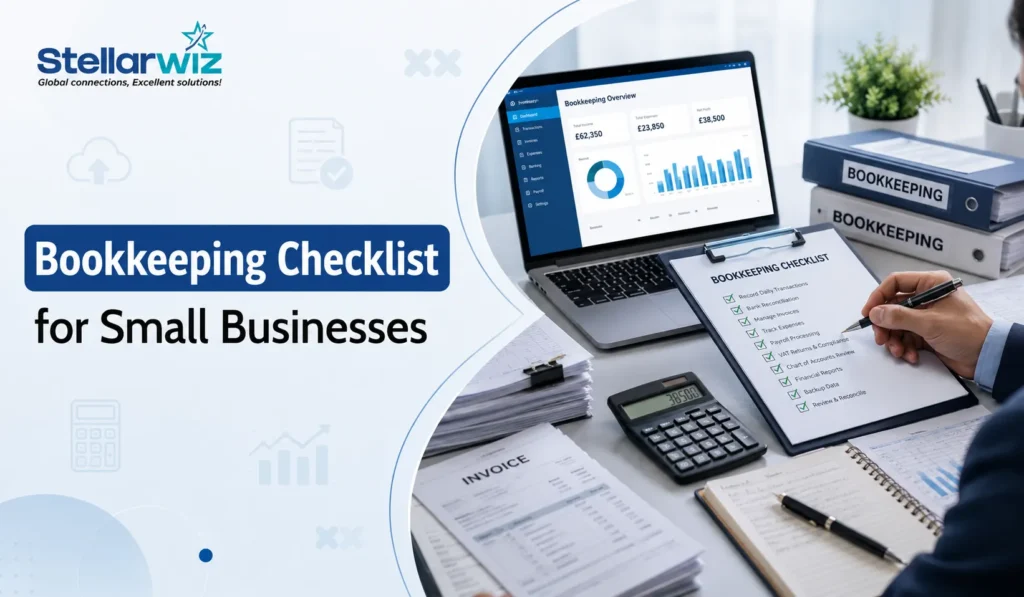
When you run a small business, you have to do a lot of different things. But when it comes to your money, guesswork can cost you. A solid bookkeeping checklist keeps your numbers clean, your cash flow healthy, and your business ready for anything from a tax audit to a growth opportunity. This guide covers daily, weekly, monthly, and other bookkeeping tasks for small business owners, whether you’re starting out or organizing years of messy records.
Key Takeaways
- An organized bookkeeping checklist with daily, weekly, monthly, and annual tasks prevents costly mistakes and last-minute stress.
- Daily habits like recording transactions and saving receipts form the foundation of clean bookkeeping records.
- Monthly bank reconciliation and P&L reviews are non-negotiable for healthy cash flow management.
- Keeping personal and business finances separate is one of the most important bookkeeping best practices you can adopt.
- As your business grows, outsourced bookkeeping services can save time, reduce risk, and improve compliance.
Why a Bookkeeping Checklist Matters
Many small business owners treat bookkeeping as a once-a-year panic before tax season. That approach leads to missed deductions, cash flow surprises, and compliance headaches. A structured bookkeeping system for small business turns a reactive scramble into a smooth, manageable routine. Every financial choice you make, from hiring your next employee to applying for a business loan, is based on how well you manage your books. For UK-based businesses specifically, exploring Outsourced Bookkeeping for UK Businesses can help you understand local compliance requirements and find the right level of support.
Daily Bookkeeping Tasks
Staying on top of your books starts with small, consistent habits.
- Record every transaction. Log all sales, payments received, and business expenses the same day they occur. Waiting even a few days creates gaps that are hard to fill later.
- Review cash on hand. A quick daily check of your cash flow management position ensures you always know what’s available and what’s going out.
- Save receipts and invoices. Store digital or physical copies of every receipt. Organised bookkeeping records are your best friend during a tax review.
Weekly Bookkeeping Checklist for Business Owners
Once a week, block out 30–60 minutes for these tasks:
- Review accounts receivable: Check which invoices are outstanding and follow up on any overdue payments. Slow-paying clients damage your cash flow more than most business owners realise.
- Update accounts payable: Know what bills are coming due. Paying on time protects vendor relationships and avoids late fees.
- Label expenses: Labeling each expense correctly, like “office supplies,” “travel,” or “software,” makes keeping track of income and expenses much more accurate at the end of the month.
- Check payroll: If you have staff, confirm hours, wages, and any deductions are being recorded correctly each week.
Monthly Bookkeeping Checklist for Small Businesses
The monthly review is where your bookkeeping process really earns its keep.
- Perform a bank reconciliation: Compare your bank statements against your internal records. This catches errors, duplicate entries, and any unauthorised transactions early.
- Review your profit and loss statement: Are revenues trending up? Are expenses creeping higher than expected? Your P&L tells the story of your business month by month.
- Reconcile credit card statements: Like bank reconciliation, this step ensures every charge is accounted for and categorised correctly.
- Check VAT or sales tax obligations: Depending on your jurisdiction, you may need to record, file, or remit tax on a monthly basis. Missing these deadlines creates penalties that add up fast.
- Back up your financial data: Whether you use cloud software or local files, always back up your records at the end of each month.
Quarterly and Annual Bookkeeping Checklist
You should look over your balance sheet, cash flow statement, and profit and loss statement (P&L) every three months to find trends and make changes to your strategy. This is also a good time to review your bookkeeping compliance obligations and check in on estimated tax payments.
Year-end bookkeeping is more intensive. You’ll want to reconcile all accounts, close out the books, review depreciation on assets, prepare for annual tax filings, and archive all financial records for the required period (typically six to seven years in the UK and US).
Key Bookkeeping Best Practices
A few bookkeeping tips for small business owners that make a real difference:
- Separate your personal and business finances at all times. Use dedicated business bank accounts and credit cards. Open a separate account for tax reserves if possible.
- Use accounting software. Tools like Xero, QuickBooks, or FreeAgent automate much of the small business accounting checklist and reduce the chance of human error.
- Understand the difference between bookkeeping vs accounting, bookkeepers record transactions, while accountants interpret them. Both matter.
- Review your bookkeeping procedures regularly. As your business grows, your systems need to grow with it.
Should You Outsource?
Many small business owners ask: Can I do bookkeeping myself? The honest answer is yes — up to a point. If your transaction volume is low and you’re comfortable with numbers, DIY bookkeeping works. But as your business scales, the time cost and risk of error increase significantly.
That’s where outsourced bookkeeping services become a smart investment. Rather than spending hours each week on reconciliations and reports, you hand the work to trained professionals and focus on growth. If you’re unsure whether to go that route, it’s worth reading up on Outsourced Bookkeeping vs In-House Bookkeeper to weigh the true costs on both sides.
Stellarwiz helps small business owners stay compliant, organized, and tax-ready all year long with professional bookkeeping services that are tailored to their needs. This is done without the high costs of hiring a full-time employee.
Frequently Asked Questions
What is included in a bookkeeping checklist for small businesses?
A complete small business bookkeeping checklist covers daily transaction recording, weekly invoice and expense reviews, monthly bank reconciliation and financial reporting, quarterly tax reviews, and annual year-end close procedures.
How often should small businesses update their bookkeeping records?
Ideally, core bookkeeping tasks for small business should be done daily (recording transactions) and weekly (reviewing payables and receivables). A full monthly review keeps everything accurate and up to date.
What are the most important bookkeeping tasks for small businesses?
Bank reconciliation, income tracking, expense tracking, and accounts receivable management are among the most critical. These ensure your financial records reflect reality and support sound decision-making.
Can I do bookkeeping myself for my small business?
Yes, especially in the early stages. With good accounting software and a consistent routine using a monthly bookkeeping checklist, many owners manage their own books effectively. However, growing businesses often benefit from professional bookkeeping services to handle complexity and ensure compliance.
What bookkeeping records should a small business keep?
You should retain invoices, receipts, bank statements, payroll records, tax filings, and financial statements. Most jurisdictions require businesses to keep financial records for at least five to seven years for tax and legal purposes.