Managing payroll is one of the most critical responsibilities for any business. From calculating employee wages and tax deductions to ensuring payroll compliance and timely salary processing, payroll requires accuracy, consistency, and expertise. Even a small mistake can lead to compliance issues, employee dissatisfaction, or financial penalties.
That’s why many businesses are turning to outsourced payroll services. Instead of managing payroll in-house, companies rely on experienced payroll specialists to handle payroll processing efficiently while ensuring compliance with changing regulations.
In this guide, we’ll explain what is outsourced payroll, what is outsourced payroll and how does it work, its benefits, and why it’s becoming the preferred solution for businesses of all sizes.
Key Takeaways
- Outsourced payroll allows businesses to delegate payroll processing, salary payments, tax deductions, and compliance to experienced professionals.
- Understanding what is outsourced payroll and how it works helps businesses choose the right payroll strategy for long-term growth.
- Outsourced payroll services improve payroll accuracy, reduce administrative workload, and ensure compliance with payroll regulations.
- Managed payroll services provide scalable, secure, and cost-effective payroll management for startups, SMEs, and growing businesses.
- Partnering with a trusted payroll service provider enables businesses to focus on strategic priorities while payroll experts manage employee wages and statutory obligations.
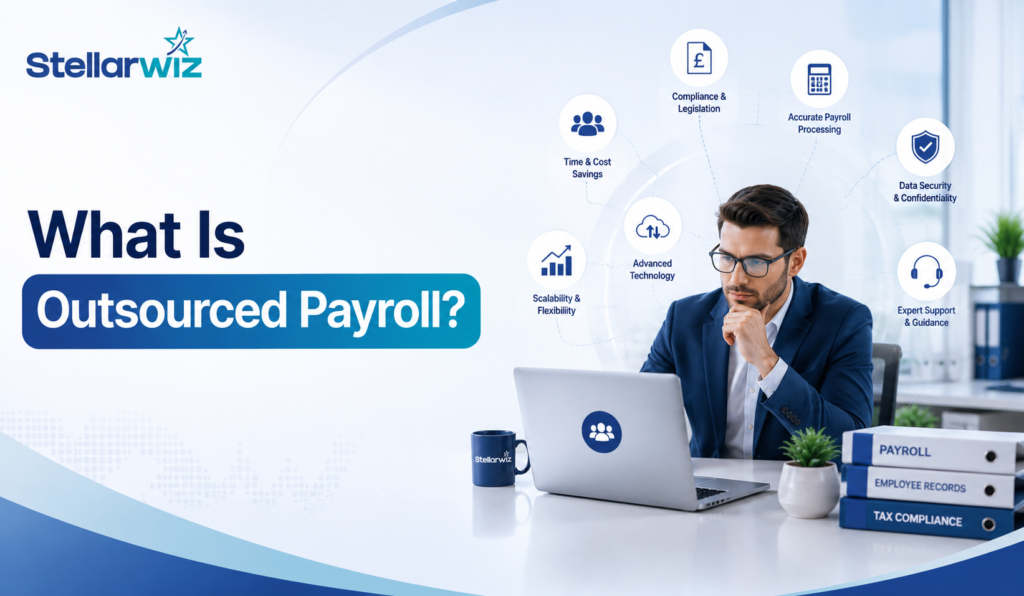
What Is Outsourced Payroll?
Outsourced payroll is the process of hiring a third-party payroll service provider to manage payroll-related tasks on behalf of a business. Rather than handling payroll internally, organizations delegate responsibilities such as salary calculations, tax deductions, payroll taxes, compliance reporting, and employee payments to payroll experts.
A professional payroll provider uses advanced payroll software and standardized processes to ensure employees are paid accurately and on time while complying with applicable tax and labor laws.
Businesses of every size, from startups to large enterprises, use outsourced payroll services to simplify payroll management and reduce administrative workload.
How Does Outsourced Payroll Work?
If you’re wondering what outsourced payroll is and how it works, the process is relatively straightforward.
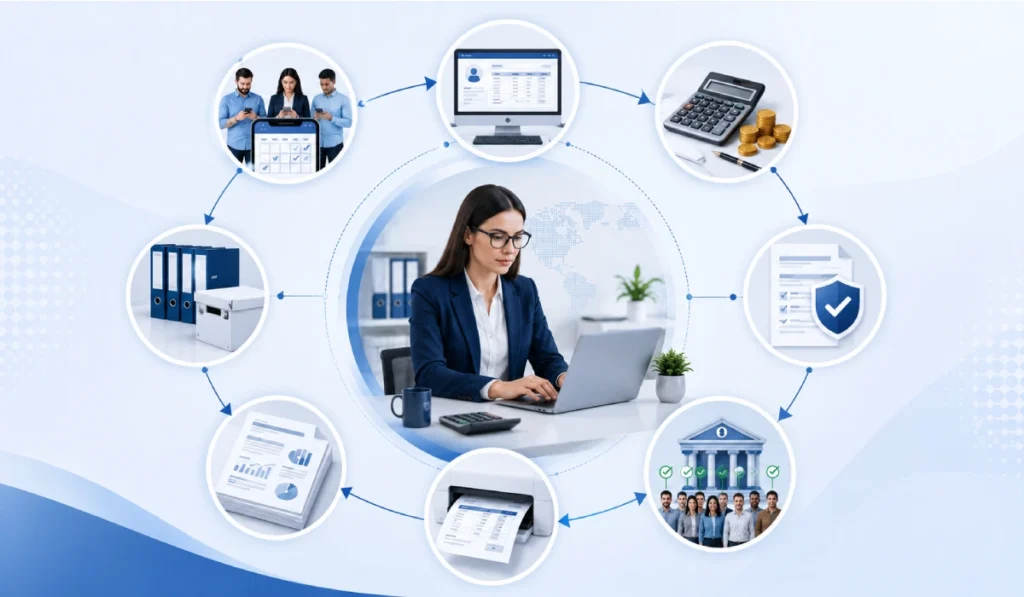
Here’s how Outsourcing Payroll Services works in most businesses:
- The business shares employee information, attendance records, salary structures, bonuses, and deductions with the payroll provider.
- The provider calculates employee wages, tax deductions, overtime, incentives, and statutory contributions.
- Payroll is processed using secure payroll software.
- Employees receive salaries on the scheduled payday.
- The provider generates payslips, payroll reports, tax filings, and compliance documentation.
- Ongoing payroll records are maintained for audits and financial reporting.
Many online payroll services also provide employee self-service portals where employees can access payslips, tax documents, and payroll history anytime.
Also Read:- Paying the Price: Top Payroll Mistakes Small Businesses Make and How to Stop Making Them
Why Do Businesses Outsource Payroll?
Businesses often ask, “Why do businesses outsource payroll?” The answer lies in efficiency, accuracy, and cost savings.
Payroll regulations frequently change, making it difficult for internal teams to stay compliant. Managing payroll also consumes valuable time that could otherwise be spent on business growth.
By choosing managed payroll services, businesses can:
- Improve payroll accuracy
- Ensure payroll compliance
- Reduce administrative workload
- Minimize payroll errors
- Save time and operational costs
- Focus on core business activities
This makes payroll outsourcing particularly valuable for growing companies. There are several Benefits of Outsourced Payroll Services that we will look at in the next section.
Benefits of Outsourced Payroll Services
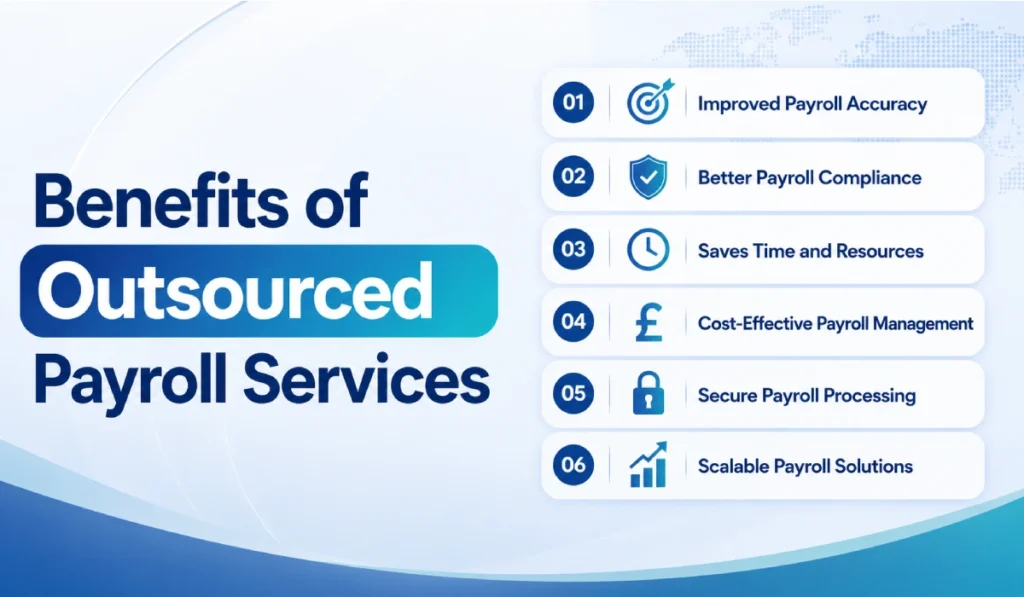
Choosing outsourced payroll services offers several advantages beyond simply processing salaries.
1. Improved Payroll Accuracy
Payroll mistakes can lead to unhappy employees and regulatory penalties.
Professional payroll processing services use automated systems and experienced payroll specialists to ensure:
- Accurate salary processing
- Correct payroll taxes
- Proper tax deductions
- Timely employee payroll
This significantly reduces manual errors.
2. Better Payroll Compliance
Payroll laws and tax regulations continue to evolve.
A reliable payroll service provider stays updated with changing legislation and ensures:
- Statutory compliance
- Accurate payroll filings
- Timely tax payments
- Proper payroll documentation
This helps businesses avoid costly compliance issues.
3. Saves Time and Resources
Payroll is repetitive but time-consuming.
Instead of spending hours managing payroll administration, businesses can outsource routine payroll tasks while focusing on:
- Business development
- Customer service
- Revenue growth
- Employee engagement
This is one of the biggest payroll outsourcing benefits for SMEs.
4. Cost-Effective Payroll Management
Hiring an in-house payroll department involves salaries, software licenses, training, and infrastructure costs.
By outsourcing, businesses only pay for the services they need, making business payroll services far more affordable, especially for startups and SMEs.
5. Secure Payroll Processing
Modern online payroll services use encrypted cloud platforms and secure data storage to protect sensitive employee information.
Most providers also implement:
- Data encryption
- Secure backups
- Controlled user access
- Confidential payroll records
This makes outsourced payroll both efficient and secure.
6. Scalable Payroll Solutions
As businesses grow, payroll becomes increasingly complex.
Professional payroll solutions easily scale to support:
- New employees
- Multiple office locations
- International payroll
- Contract workers
- Variable compensation structures
This flexibility makes payroll outsourcing for growing businesses an ideal long-term solution.
Also Read: Paying the Price: Top Payroll Mistakes Small Businesses Make and How to Stop Making Them
Common Payroll Challenges Businesses Face
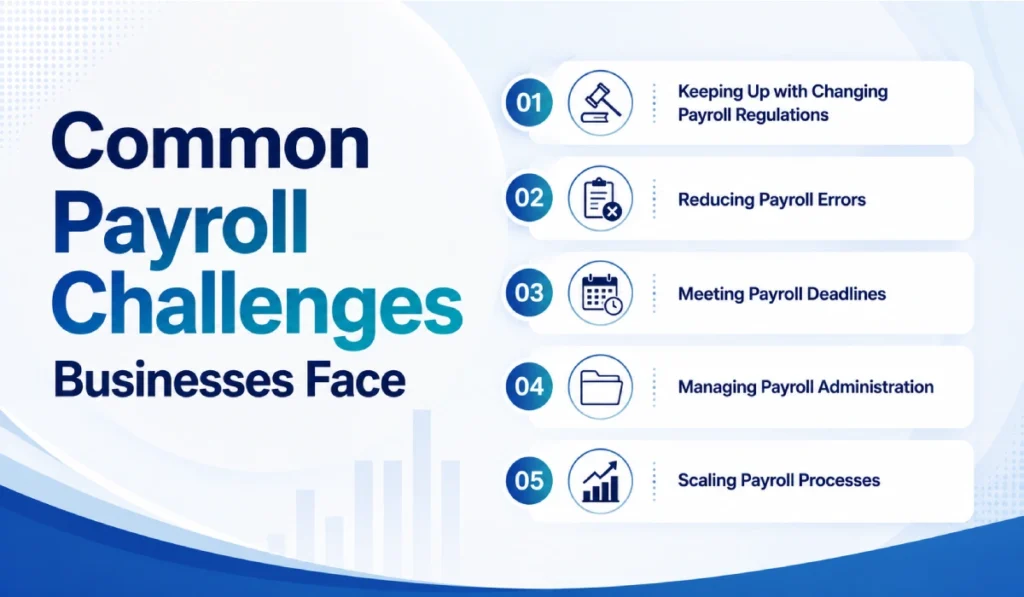
Many businesses initially manage payroll in-house because it appears straightforward. However, as employee numbers increase and payroll requirements become more complex, maintaining an accurate and compliant payroll process becomes significantly more demanding.
Some of the most common payroll challenges include:
Keeping Up with Changing Payroll Regulations
UK payroll legislation changes regularly. Businesses must stay informed about updates to HMRC requirements, PAYE regulations, National Insurance Contributions, workplace pensions, and statutory payments to remain compliant.
Reducing Payroll Errors
Manual payroll calculations increase the likelihood of mistakes. Incorrect salary payments, missed deductions, duplicate payments, or payroll processing errors can affect employee confidence and require additional administrative work to resolve.
Meeting Payroll Deadlines
Missing payroll deadlines can result in delayed salary payments, employee dissatisfaction, and late HMRC submissions. Maintaining a consistent payroll schedule becomes increasingly difficult as businesses expand.
Managing Payroll Administration
Payroll involves more than calculating salaries. Finance teams must also maintain employee records, generate payslips, prepare payroll reports, respond to payroll queries, and retain documentation for compliance and auditing purposes.
Scaling Payroll Processes
Payroll systems that work for a small team may become inefficient as the business grows. Increasing employee numbers, multiple pay structures, and expanding operations often require more robust payroll processes.
By outsourcing payroll, businesses can overcome these challenges while improving efficiency, accuracy, and compliance.
Outsourced Payroll for Small Businesses and Startups
Managing payroll internally can be overwhelming for startups with limited resources.
That’s why outsourced payroll for small businesses and outsourced payroll services for startups have become increasingly popular.
Instead of hiring dedicated payroll staff, startups gain access to payroll experts who handle salary processing, compliance, reporting, and payroll administration while founders focus on growing the business.
How to Choose the Right Payroll Service Provider
Not every payroll provider offers the same level of expertise.
When selecting a payroll partner, consider:
- Industry experience
- Payroll compliance expertise
- Data security measures
- Cloud-based payroll software
- Transparent pricing
- Customer support
- Reporting capabilities
- Integration with accounting systems
Choosing the right provider ensures reliable payroll management while supporting long-term business growth.
Is Outsourced Payroll Safe?
Yes. Reputable outsourced payroll services prioritize data security and compliance.
Leading providers use secure cloud infrastructure, encrypted data transfers, multi-factor authentication, and regular system updates to safeguard sensitive payroll information.
When working with an experienced provider, outsourcing payroll is often more secure than relying on manual, in-house processes.
In-House Payroll vs Outsourced Payroll
Choosing between managing payroll internally and outsourcing payroll depends on the size of your business, available resources, and long-term growth plans.
| In-House Payroll | Outsourced Payroll |
| Payroll managed by internal staff | Payroll managed by experienced specialists |
| Greater administrative workload | Reduced internal administration |
| Ongoing software and training costs | Predictable service-based pricing |
| Internal responsibility for HMRC compliance | Specialist support for payroll compliance |
| Higher risk of manual errors | Standardised payroll processes improve accuracy |
| Limited scalability as the business grows | Easily adapts to changing business needs |
| Internal teams spend time on routine payroll tasks | Teams can focus on strategic business priorities |
For many UK businesses, outsourcing payroll provides greater flexibility, improved compliance, and access to payroll expertise without the cost of expanding internal resources.
Conclusion
Payroll is much more than paying employees on time. It’s a critical business function that impacts compliance, employee satisfaction, and operational efficiency. By understanding what is outsourced payroll, businesses can make informed decisions about streamlining payroll processes, reducing administrative burdens, and improving overall accuracy.
Whether you’re a startup, SME, or an expanding organization, outsourcing payroll can save time, reduce compliance risks, and support sustainable growth. If you’re looking for a trusted partner, Stellarwiz offers reliable payroll outsourcing solutions designed to simplify payroll management while ensuring accuracy, security, and compliance. Explore our related resources on In-House Payroll vs. Outsourcing to learn how the right payroll strategy can help your business grow.
Frequently Asked Questions
1. What is outsourced payroll?
Outsourced payroll is the practice of hiring a third-party payroll provider to manage payroll tasks such as salary processing, tax deductions, payroll compliance, payslips, and statutory reporting on behalf of a business.
2. How does outsourced payroll work?
Businesses share employee and payroll data with a payroll service provider, who calculates salaries, processes payments, manages payroll taxes, prepares reports, and ensures compliance with applicable regulations.
3. What are the benefits of outsourced payroll?
The key benefits include improved payroll accuracy, better compliance, reduced administrative workload, cost savings, enhanced data security, and access to payroll expertise.
4. Why do businesses outsource payroll?
Businesses outsource payroll to save time, reduce operational costs, ensure compliance with payroll regulations, minimize errors, and allow internal teams to focus on core business activities.
5. Is outsourced payroll safe?
Yes. Reputable outsourced payroll providers use secure cloud technology, data encryption, access controls, and compliance best practices to protect sensitive payroll information and employee data.